

Hailstorms can leave a property looking relatively normal from the ground while causing thousands of dollars in hidden damage above your head. That reality is exactly why understanding how to document hail damage for an insurance claim is so important. The quality of your documentation can influence everything from claim approval speed to the amount ultimately paid by the insurance company. Many homeowners make the mistake of assuming the insurance adjuster will find every issue. Sometimes they do. Sometimes they don’t.
The strongest claims are usually supported by thorough evidence gathered immediately after the storm. Photos. Videos. Written records. Inspection reports. Weather documentation. Together, these items help create a clear story about what happened and why repairs are necessary. If you own property in La Porte, or anywhere hailstorms are common, knowing how to document damage correctly can help protect both your roof and your financial interests. Let’s break down the process step by step.
Why Proper Documentation Is Critical for a Hail Damage Insurance Claim
Insurance companies make decisions based on evidence. That simple fact drives the entire claims process.
When a claim is filed, adjusters evaluate available information to determine:
- Whether damage occurred
- What caused the damage
- When the damage likely happened
- How extensive the damage is
- What repairs may be necessary
Without proper evidence, even legitimate damage can become difficult to prove. Think of documentation as building a case file. The stronger the file, the easier it becomes to demonstrate the full extent of the loss.
Insurance Companies Rely on Evidence
An insurance carrier cannot simply assume damage exists because a storm occurred. Instead, they look for supporting information such as:
| Documentation Type | Purpose |
|---|---|
| Photos | Visual proof of damage |
| Videos | Broader property context |
| Inspection Reports | Professional findings |
| Weather Records | Storm verification |
| Receipts | Proof of expenses |
| Notes and Logs | Timeline support |
Every piece strengthens the overall claim.
What Happens When Documentation Is Incomplete?
Unfortunately, poor documentation creates opportunities for disputes.
Potential issues include:
- Delayed claim processing
- Lower settlement offers
- Questions regarding damage origin
- Missed repair items
- Supplemental claim complications
This is why learning how to document hail damage for an insurance claim before filing can make a substantial difference.
Prioritize Safety Before Inspecting Property Damage
Before grabbing a ladder or camera, focus on safety. Storm-damaged properties can contain hazards that aren’t immediately obvious. Loose shingles. Broken tree limbs. Wet surfaces. Damaged electrical systems. All create unnecessary risk.
Conduct a Ground-Level Inspection First
Start where it’s safest. Walk around the property and look for visible signs of damage from the ground.
Areas to examine include:
- Roof edges
- Gutters
- Downspouts
- Window screens
- Siding
- Garage doors
- Air conditioning units
- Outdoor furniture
Take photos as you move around the structure. Don’t worry about perfection at this stage. The goal is to preserve evidence.
Protect the Property from Additional Damage
Insurance policies often require homeowners to take reasonable steps to prevent further loss.
Examples include:
- Covering exposed areas with tarps
- Removing water from interiors
- Protecting personal belongings
- Scheduling emergency mitigation
Keep all receipts. Every expense should be documented and saved.
Create a Complete Hail Damage Documentation Checklist
One of the most effective ways to document damage is by using a checklist. Without one, it’s easy to overlook important areas.
Exterior Components to Document
Most hail damage claims begin outside.
Photograph and inspect:
- Roofing materials
- Ridge caps
- Roof vents
- Gutters
- Downspouts
- Siding
- Window frames
- Screens
- Garage doors
- Decks
- Fences
Don’t focus solely on the roof. Collateral damage often helps establish storm severity.
Interior Areas to Document
Sometimes the first signs of damage appear inside.
Look for:
- Ceiling stains
- Water spots
- Bubbling paint
- Damaged drywall
- Wet insulation
- Flooring issues
- Attic moisture
Take photographs immediately. Interior damage can worsen quickly.
Personal Property Damage
Don’t forget items around the property.
Examples include:
- Patio furniture
- Outdoor kitchens
- Storage sheds
- HVAC equipment
- Vehicles
- Landscaping features
Many homeowners concentrate entirely on the structure and overlook damaged belongings.
How to Take Insurance-Ready Photos of Hail Damage
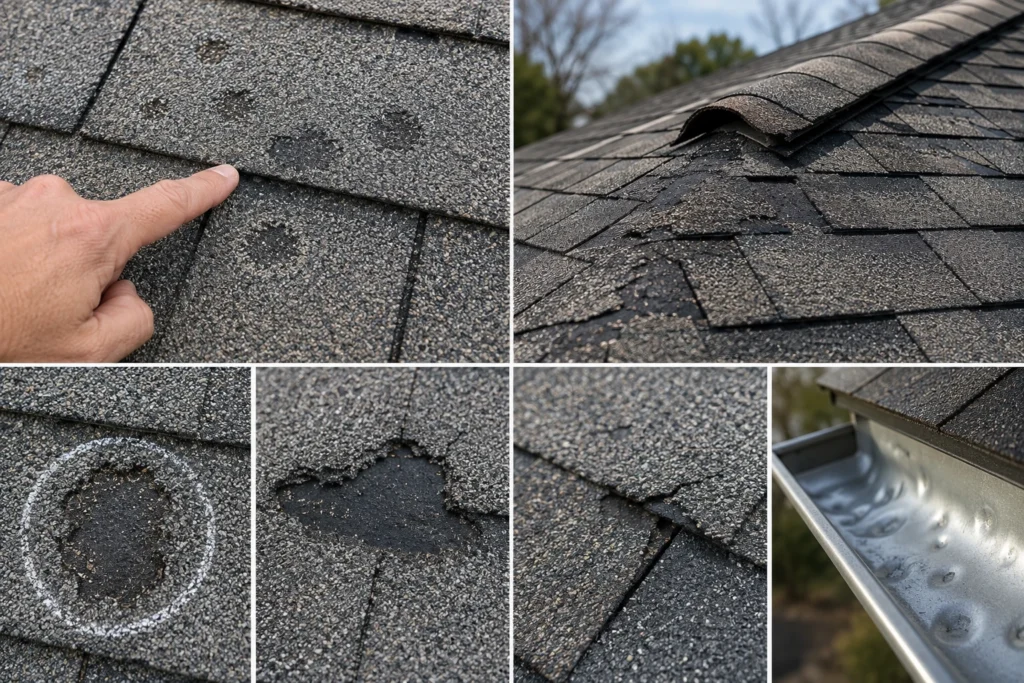
Photos often become the foundation of a claim. But not all photos provide equal value. The best claim documentation combines wide-angle images with detailed close-ups.
Start With Wide-Angle Photos
Wide shots establish context.
Photograph:
- Entire roof elevations
- Full sides of the home
- Overall property condition
These images help show where damage occurred.
Capture Detailed Close-Ups
After taking broad images, move closer.
Focus on:
- Dented metal
- Cracked shingles
- Granule loss
- Damaged vents
- Impact marks
Take several photos from different angles. Lighting changes can reveal damage otherwise hidden.
Photograph Damage From Multiple Perspectives
One image rarely tells the complete story.
Take:
- Straight-on photos
- Side-angle photos
- Distance shots
- Close-up shots
More evidence is almost always better than less.
Include Scale References
When possible, place an object near the damage.
Examples:
- Coins
- Measuring tape
- Rulers
This helps demonstrate size and severity.
Photograph Hailstones If Possible
If hail remains on the ground, document it immediately.
Include:
- Multiple hailstones
- Measurement references
- Ground conditions
These images can become valuable supporting evidence later.
Why Video Documentation Can Strengthen a Claim
Photos freeze moments. Videos provide context. That distinction matters. Video allows you to demonstrate how damage is distributed throughout the property.
Conduct a Property Walkthrough
Use a smartphone or camera and slowly walk around the structure. Narrate what you see.
For example:
“Visible dents are present on the gutter system.”
“Water staining is visible on the ceiling.”
Simple observations can create valuable records.
Capture Widespread Damage
Video is especially useful when documenting:
- Multiple roof slopes
- Large properties
- Extensive exterior damage
- Interior water intrusion
It provides continuity that photographs sometimes lack.
Organize Videos Properly
Store files in folders labeled by:
- Date
- Location
- Damage type
Organization becomes critical later in the claim process.
Create Written Records Immediately After the Storm
One of the most overlooked parts of how to document hail damage for an insurance claim is maintaining written records. Human memory fades quickly. Written notes do not.
Record Key Storm Information
As soon as possible, write down:
| Information | Example |
|---|---|
| Date | May 15 |
| Time | 6:30 PM |
| Hail Size | 1.5 inches |
| Storm Duration | 20 minutes |
| Wind Conditions | High winds |
Even rough estimates can be helpful.
Maintain a Damage Log
Create a running list of observations.
Include:
- Newly discovered damage
- Inspection dates
- Repair discussions
- Contractor visits
This creates a useful timeline.
Document Every Conversation
Whenever you speak with:
- Insurance representatives
- Contractors
- Roofing companies
- Inspectors
Record:
- Date
- Time
- Person’s name
- Summary of discussion
These notes can become valuable if questions arise later.
Gather Supporting Evidence Beyond Photos
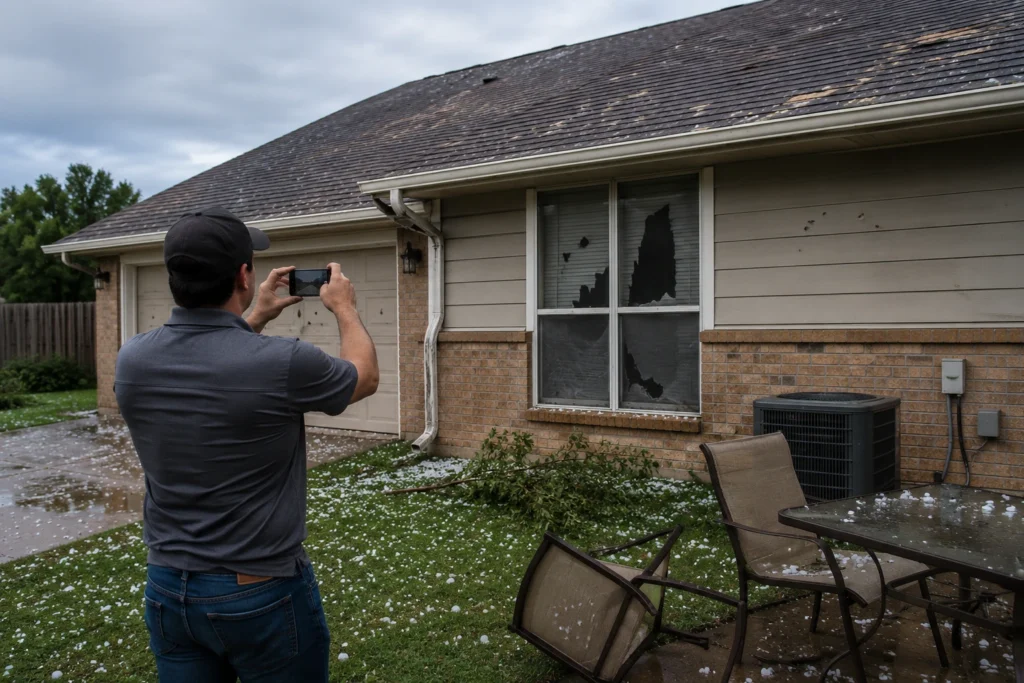
Strong claims rarely rely on photographs alone. Supporting documentation can reinforce the story.
Obtain Local Weather Reports
Weather data helps verify that a hail-producing storm actually occurred.
Relevant records may include:
- National Weather Service reports
- Local weather station data
- Radar reports
- Severe weather alerts
These reports help establish timing and severity.
Save News Coverage and Alerts
Local news reports often document significant hail events.
Save:
- News articles
- Weather alerts
- Storm warnings
- Emergency notifications
Every piece contributes additional context.
Preserve Emergency Repair Receipts
If you spend money protecting your property, save proof.
Examples include:
- Tarp installation
- Water extraction
- Temporary roofing repairs
- Emergency contractor visits
Documentation should be comprehensive. Not selective.
How Professional Inspections Help Support Documentation
Professional inspections add another layer of credibility. While homeowner documentation is important, trained inspectors often identify damage that may not be visible from the ground. This becomes especially important for roofing systems. For example, understanding how hail impacts roofing materials often involves examining surface characteristics, impact patterns, and material performance. Similar evaluation principles are found in fields such as Fractography, where experts study surface damage and failure characteristics to determine causes and patterns.
Professional inspections frequently include:
- Detailed photographs
- Damage mapping
- Repair recommendations
- Measurements
- Written findings
These reports can significantly strengthen a claim file. A thorough inspection may also uncover hidden damage that supports a future Hail Damage Roof Insurance Claim, particularly when roofing materials are removed and underlying components become visible.
Common Signs of Hail Damage Homeowners Should Photograph
Knowing what to photograph is just as important as knowing how to take photos. Many homeowners document obvious damage while missing subtle indicators that insurance adjusters often look for during inspections. The goal is simple. Capture everything. Then let the experts determine what is relevant.
Roof Damage Indicators
Roofs absorb the majority of hail impacts.
Photograph signs such as:
- Circular impact marks
- Missing granules
- Exposed asphalt
- Cracked shingles
- Torn shingle edges
- Bruised roofing materials
- Damaged ridge caps
If you can safely observe these conditions from the ground or with binoculars, document them immediately. Remember, learning how to document hail damage for an insurance claim is largely about creating a complete visual record before conditions change.
Metal Surface Damage
Metal components frequently provide some of the clearest evidence of hail activity.
Inspect and photograph:
- Gutters
- Downspouts
- Roof vents
- Flashing
- Window trim
- Metal fencing
- Outdoor equipment
Dents often remain visible long after other damage becomes harder to identify.
Siding and Window Damage
Hail can damage more than roofing materials.
Look closely for:
- Cracks
- Chips
- Dents
- Impact marks
- Broken screens
- Damaged window glazing
These secondary impacts help establish storm severity and may support the overall claim.
Organizing Documentation for an Insurance Claim
Gathering evidence is only half the battle. Organization matters. A well-organized claim package is easier for insurance companies to review and easier for homeowners to manage.
Create Digital Folders
Store documentation in clearly labeled folders. A simple structure may look like this:
| Folder | Contents |
|---|---|
| Photos | Damage photographs |
| Videos | Walkthrough recordings |
| Receipts | Emergency expenses |
| Reports | Inspection findings |
| Communications | Emails and letters |
| Weather Data | Storm verification |
Good organization reduces confusion later.
Use Clear File Names
Instead of saving files with generic names, use descriptive labels.
Examples:
- Front-Roof-Hail-Damage-May15.jpg
- Living-Room-Water-Stain.jpg
- Gutter-Dents-East-Side.jpg
This small step saves enormous time when submitting documentation.
Build a Claim Timeline
Insurance claims often involve weeks or months of communication.
Create a timeline that includes:
- Storm date
- Initial inspection
- Claim filing
- Adjuster visit
- Repair estimates
- Supplemental submissions
A timeline helps maintain clarity throughout the process.
Documentation Mistakes That Can Hurt Your Claim
Some mistakes are surprisingly common. And unfortunately, they can weaken otherwise valid claims.
Waiting Too Long to Document Damage
Time works against documentation. Weather changes. Repairs happen. Evidence disappears. The sooner damage is documented, the stronger the claim tends to be.
Taking Too Few Photos
Many homeowners take only a handful of pictures. That is rarely enough. Take more than you think you need. Then take more. Storage is inexpensive. Missed evidence can be costly.
Failing to Save Receipts
Every expense matters.
Save receipts for:
- Emergency tarping
- Temporary repairs
- Water mitigation
- Inspection fees
- Protective materials
These expenses may become important later.
Discarding Damaged Materials Too Soon
Sometimes damaged materials become evidence.
Before disposing of:
- Broken shingles
- Damaged siding
- Dented metal pieces
Consider photographing and preserving them until claim questions are resolved.
Overlooking Interior Damage
Many homeowners focus exclusively on the roof. That can be a mistake. Interior damage often demonstrates the real-world impact of the storm and helps justify repair needs.
Missing Weather Verification Evidence
A strong claim combines physical damage evidence with storm verification. Document both. Not just one.
When Additional Documentation May Be Needed
The claim process doesn’t always end after the first inspection. In many cases, additional information becomes necessary later.
Supplemental Damage Discoveries
Roof replacements sometimes reveal hidden conditions such as:
- Damaged decking
- Water intrusion
- Rotting wood
- Flashing failures
These issues may not have been visible during the original inspection. Additional documentation becomes necessary when new damage is discovered.
Disputed Damage Findings
Occasionally, homeowners and insurers disagree. Perhaps the insurer believes damage is old. Perhaps repair scope differs. When disputes arise, strong documentation becomes even more important. The more evidence available, the easier it becomes to support your position.
Underpaid Insurance Estimates
Sometimes damage is acknowledged but not fully valued. Additional photographs, contractor reports, and measurements may help support requests for further review.
Reopened Claims
Certain situations require reopening claims after new evidence emerges. A complete documentation archive makes this process much easier. This is another reason why understanding how to document hail damage for an insurance claim before filing can create long-term advantages.
How Homeowners in La Porte Can Prepare Before Filing a Claim
Preparation matters. Homeowners who organize evidence before contacting the insurance company often experience a smoother process.
Build a Documentation Package
Gather all relevant materials into one location.
Include:
- Photos
- Videos
- Inspection reports
- Weather records
- Receipts
- Notes
- Communication logs
Think of it as creating a complete story of the loss.
Understand What Insurers Commonly Request
Most insurance companies typically ask for:
| Requested Item | Purpose |
|---|---|
| Claim Details | Basic loss information |
| Photos | Visual verification |
| Inspection Reports | Damage support |
| Repair Estimates | Cost evaluation |
| Receipts | Expense verification |
Having these items ready can accelerate the process.
Prepare for the Adjuster Inspection
Before the inspection:
- Organize photographs
- Prepare questions
- Gather receipts
- Create a damage summary
This ensures important details are not overlooked. For property owners in La Porte, storm seasons can produce significant weather events. Preparation before filing often helps reduce unnecessary delays and confusion.
Why Consistency Matters Throughout the Claim Process
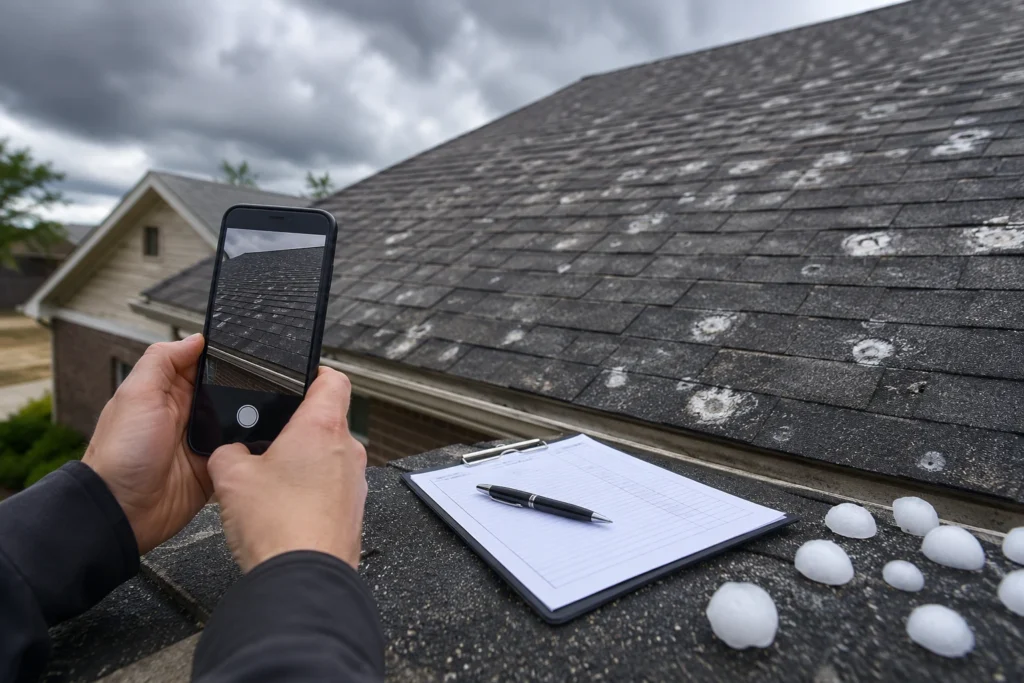
Documentation is not a one-time event. It should continue throughout the claim.
Continue recording:
- New discoveries
- Contractor findings
- Additional damage
- Repair progress
Consistency creates a stronger record. It also helps prevent important details from being forgotten.
Update Your Damage Log Regularly
Every inspection. Every phone call. Every repair. Record it. Small details can become important later.
Back Up Everything
Never rely on a single device.
Store documentation in:
- Cloud storage
- External drives
- Email backups
Redundancy protects valuable evidence.
When a Public Adjuster May Help Review Documentation
Many claims move forward smoothly. Others become more complicated. In those situations, homeowners sometimes seek additional assistance.
Large Loss Claims
The larger the claim, the more documentation often becomes necessary.
Complex claims frequently involve:
- Extensive roof damage
- Interior water damage
- Multiple structures
- Large repair estimates
Detailed review becomes increasingly important.
Complex Roofing Damage
Roofing systems contain many interconnected components.
Damage may affect:
- Shingles
- Underlayment
- Flashing
- Ventilation systems
- Decking
Comprehensive documentation helps ensure all affected areas are considered.
Disputed Coverage Situations
When questions arise regarding:
- Cause of loss
- Repair scope
- Claim valuation
Documentation often becomes the foundation of discussions. The better the evidence, the stronger the position.
Understanding Documentation Requirements
Many homeowners simply want guidance.
They want to know:
- What evidence matters most
- What may be missing
- How to organize information effectively
Professional claim reviews can sometimes help identify documentation gaps before they become problems.
Strong Documentation Often Leads to Better Outcomes
While no documentation strategy can guarantee a specific claim result, strong evidence generally creates stronger claims. Insurance companies rely on information. The more accurate and complete that information is, the easier it becomes to evaluate damage fairly. This is why learning how to document hail damage for an insurance claim is one of the most valuable steps a homeowner can take after a storm.
Good documentation:
- Preserves evidence
- Supports repair needs
- Establishes timelines
- Verifies storm impacts
- Strengthens communication
Most importantly, it helps tell the complete story.
Conclusion
Hailstorms can create significant property damage in a matter of minutes. The documentation process begins immediately afterward. Understanding how to document hail damage for an insurance claim means more than taking a few photographs. It involves building a complete record that includes images, videos, written notes, weather verification, inspection reports, receipts, and ongoing updates. The homeowners who document thoroughly are often the homeowners who place themselves in the strongest position during the claims process. Whether you’re dealing with minor roof impacts or significant storm-related damage, acting quickly and staying organized can make a meaningful difference.
For homeowners in La Porte, preparation and documentation remain two of the most effective tools available after a hail event. The sooner evidence is collected and preserved, the better equipped you’ll be to support your claim and protect your property investment. When it comes to how to document hail damage for an insurance claim, thoroughness is never wasted effort. In many cases, it becomes one of the most important factors in the entire claim process.
FAQs
Document damage as soon as it is safe to do so. Early documentation helps preserve evidence before conditions change.
Take wide-angle photos of the property and close-up images of all visible damage, including roofing, gutters, siding, and interior issues.
You can perform a ground-level inspection, but avoid climbing onto the roof if there are safety risks.
Yes. Videos provide context and can show the extent of damage across multiple areas of the property.
Absolutely. Keep receipts for tarping, water mitigation, and other emergency measures to support your claim.
Yes. Weather reports can verify that a hail-producing storm occurred in your area on the reported date.
Document the new damage immediately and notify your insurance company as soon as possible.
There is no set number, but more detailed documentation is generally better than too little evidence.
Yes. If hail damage leads to roof leaks and water intrusion, resulting interior damage may be included.
Organized records make it easier to provide evidence, respond to requests, and track claim progress.